What happens to donated clothes? It is a professional, multi-stage process that begins the moment an item is collected and ends when it provides warmth, dignity, or a fresh start to a person in need. Once a garment leaves your hands, it transforms “unused storage” into a “vital resource.”
This journey involves rigorous quality checks, strategic sorting, and a logistics network designed to ensure that your generosity is never wasted. Whether an item is redistributed to a family or sent for textile recycling, every piece follows a path that prioritizes human respect and environmental responsibility.
What Happens to Donated Clothes?
The journey of a donated garment is essentially a “relay race” of kindness where the donor starts the first lap, and the charity finishes the race by delivering the aid. After the clothes donation process begins at your doorstep, the items are moved to a central hub where they are categorized by their condition, season, and size.
1- Collection Process
The first step in the cycle is the Charity Clothes Collection from Home, which has modernized the way we give in Saudi Arabia. Instead of items sitting in a dusty street bin for weeks, a professional team arrives at a scheduled time to retrieve your bags.
- The Initial Handover: Drivers ensure that bags are securely closed to protect the contents from humidity or dust during transit.
- Logistical Tracking: Each collection is often logged into a digital system, allowing the charity to predict what kind of inventory is arriving at the warehouse.
- Safety First: Items are kept in climate-controlled vehicles to maintain the Donation Standards required for high-quality distribution. Think of the collection van as a bridge; it’s the physical link that carries your good intentions into a system capable of making them a reality.
2- Sorting and Processing
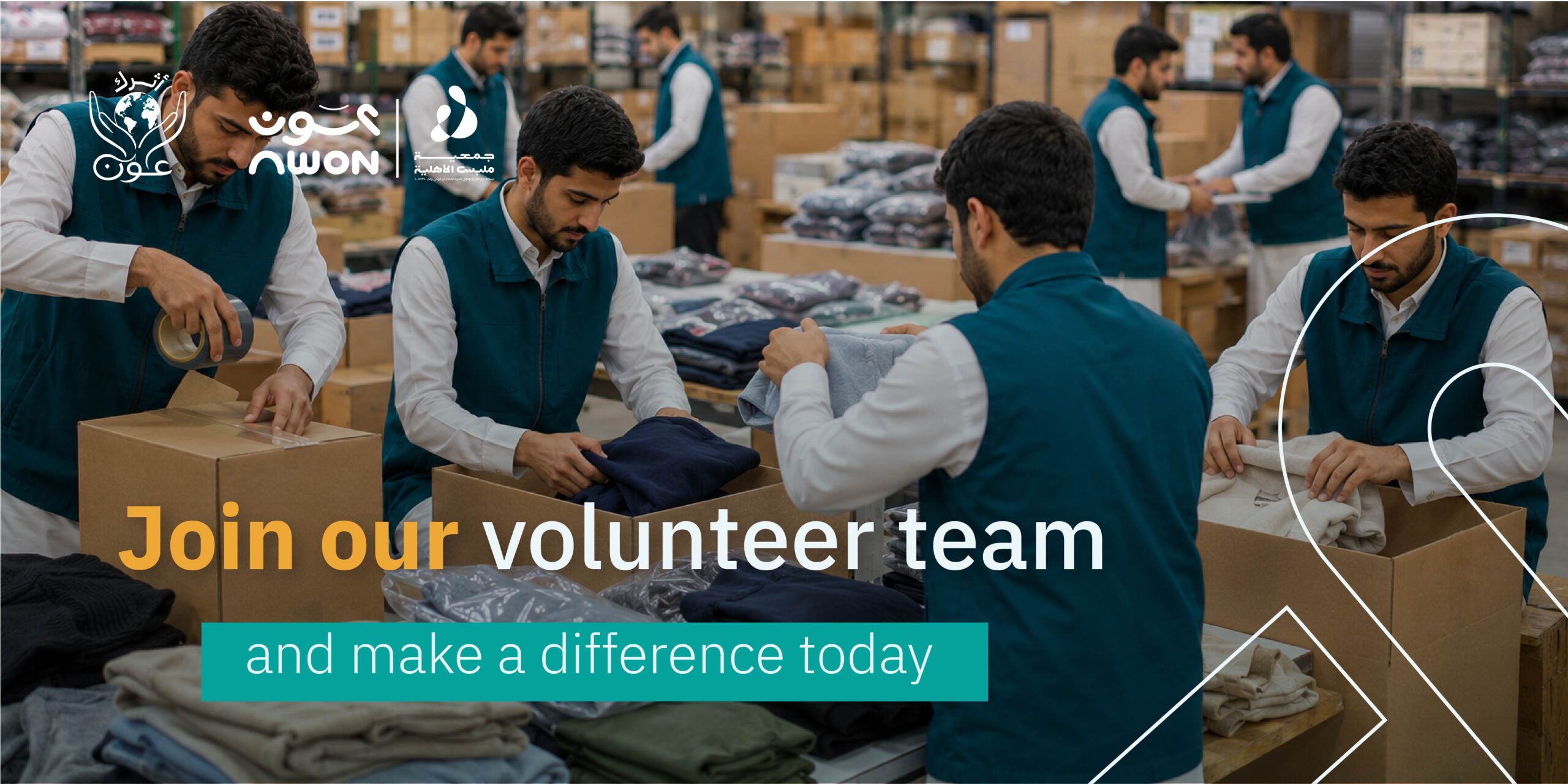
Once the van arrives at the warehouse, the most labor-intensive part of the clothes donation process begins: the sorting. This is where volunteers and staff act like “curators,” meticulously inspecting every piece to ensure it meets the dignity requirements of the recipients.
- Hygiene and Quality Check: Every shirt, abaya, or pair of trousers is checked for stains, odors, or irreparable damage. Items that pass this “dignity test” move forward.
- Categorization: Clothes are separated into groups, children’s school wear, men’s formal attire, women’s seasonal clothing, etc. This is similar to a library sorting books by genre; it makes finding the right “story” for a family much faster.
- Seasonality Focus: In the Kingdom, winter coats are separated from summer linens. If you donate a jacket in August, it is carefully stored in a “seasonal hold” so it can be distributed exactly when the first cold snap hits.
3- Distribution to Needy
This is the stage where clothes go to fulfill their true purpose. Charities maintain lists of registered families and individuals who have been vetted for support. The distribution is handled with the utmost privacy to protect the self-esteem of the recipients.
- Direct Handouts: Families may visit a distribution center that looks and feels like a regular boutique, allowing them to choose items that actually fit their style and size.
- Mobile Units: For families in remote or rural areas, charities often send “mercy trucks” filled with sorted bundles of clothing, bringing the aid directly to their neighborhoods.
- The Impact: When a child receives a “new-to-them” school uniform or a father receives a clean suit for a job interview, the impact is immediate. It isn’t just about the fabric; it’s about the feeling of being seen and supported by their community. This is the heart of charity distribution.
4- Recycling Unsuitable Clothes
Sometimes, an item is too worn out to be worn again, but that doesn’t mean it is trash. In a responsible system, unsuitable clothes are diverted to textile recycling centers rather than landfills.
- A Second Life for Fibers: Ripped or stained cotton shirts are often shredded and turned into industrial cleaning rags or home insulation.
- Environmental Stewardship: By recycling the “unwearable,” charities ensure that the water and energy used to grow the cotton years ago are not wasted.
- The Analogy of a Tree: Just as a fallen tree in a forest eventually becomes mulch that helps new plants grow, an old, torn garment becomes the raw material for a new product, keeping the cycle of utility alive.
The Role of Modern Systems in Saudi Charity Work
The evolution of how we manage donated goods in Saudi Arabia is a reflection of the Kingdom’s broader goals for social efficiency. By moving away from uncoordinated drop-offs and toward a professional Charity Clothes Collection from home model, we have significantly reduced waste.
Modern organizations now treat clothing as a “social asset” that must be managed with the same precision as a corporate inventory. This ensures that a shirt donated in Riyadh can be in the hands of someone in a small village within days, perfectly cleaned and ready for use.
Why Quality Controls Matter?
Adhering to strict Donation Standards during the sorting phase is what separates a professional charity from a simple “used goods” pile. Recipients are our brothers and sisters, and they deserve items that look and feel respectful. This is why charities emphasize that donations should be “gently used”, it ensures that the distribution centers are filled with hope rather than clutter. When the quality is high, the “turnover” is faster, meaning aid reaches more people in less time.
A Partner You Can Trust: AWON’s Modern Approach
AWON is a leading force in this field, providing a service that makes the journey of your belongings both simple and transparent. They have completely re-engineered the way donations move from your home to those who need them most.
By choosing their platform, you are choosing a system that values your time as much as it values the items you give.
- Comprehensive Acceptance: Their teams aren’t just looking for shirts; they welcome a wide array of items, including all varieties of footwear and various types of bags, ensuring your entire home-clearing effort is productive.
- Digital Seamlessness: They have created a highly accessible ordering process, allowing you to arrange a collection in just a few clicks without any administrative headaches.
- Zero-Cost Doorstep Service: One of their standout features is providing free-of-charge collection directly from your residence. You don’t have to worry about the logistics or the cost of transport; they handle it all.
- Vision 2030 Alignment: Every action they take supports the Kingdom’s Vision 2030 goals, particularly in the realms of environmental sustainability and the promotion of a circular economy through advanced recycling.
Do charities sell donated clothes?
Some charities around the world sell a portion of donations in thrift shops to cover the costs of their social programs (like food or medicine). In Saudi Arabia, many charities focus on direct distribution to registered families. If an item is sold, the proceeds go directly back into the charity’s mission to help the poor.
Are all clothes reused?
Not all. Items that are heavily damaged, stained, or unhygienic are sent to textile recycling. This ensures they don’t end up in a landfill but are still used in a productive way, such as for industrial materials.
How long until clothes reach someone in need?
The timeframe usually depends on the city and the season. Generally, once an item is picked up, it is sorted within 48 to 72 hours and can be in the hands of a family within a week or two, especially during high-demand periods like the start of winter or Ramadan.