Understanding how charities handle clothing donations highlights a refined system where items move from donation points into carefully managed pipelines of cleaning, categorization, and grading, ensuring they serve as meaningful social assets.
By examining the logistics behind these organizations, we uncover a sophisticated balance of environmental stewardship and humanitarian aid, revealing that the true value of a donated garment lies in its potential to empower communities and sustain the planet.
How Charities Manage Clothing Donations?
Charities manage clothing donations by operating a “sorting funnel” that prioritizes the most immediate needs of the community while ensuring that zero-waste principles are upheld. When a bag of clothes enters the facility, it is assigned a category based on its current condition, seasonality, and the specific demographics of the families registered with the organization.
This donation management system is what prevents charity warehouses from becoming overwhelmed by clutter and instead turns them into efficient hubs of “just-in-time” support.
The Philosophy of Dignity
The core of nonprofit clothing handling is the belief that a gift should never feel like a burden. If a shirt is missing buttons or has a permanent stain, a professional charity will not pass that problem onto a needy family. Instead, they apply strict Donation Standards to ensure that everything placed in the hands of a recipient is ready to wear and helps them feel integrated into society.
Operational Flow in Modern Charities:
- The Check-In: Every bag is visually inspected upon arrival for moisture or damage.
- Grading: Items are separated into “Premium” (for festive use), “Standard” (for daily wear), and “Recyclable.”
- Storage Management: Clothes are rotated seasonally; you won’t see winter coats taking up space on the distribution floor during the peak of summer.
Intake and Logging Systems
The intake process is the “reception desk” of the charity world, where each contribution is officially recognized and entered into a tracking system. In a professional clothes donation process explained, this step is crucial for accountability. It allows the organization to know exactly how many kilograms of children’s wear or men’s formal attire they have in stock at any given moment.
Imagine a giant library where books are constantly coming in from thousands of different people. Without a logging system, it would be impossible to find a specific “book” for a person who needs it. Digital intake allows charities to:
- Track Inventory: Know if they have enough blankets before a cold front arrives.
- Verify Quality: Log who processed the bag to ensure standards are being met.
- Provide Feedback: Generate digital receipts for donors, confirming their items have entered the system.
Volunteer Coordination
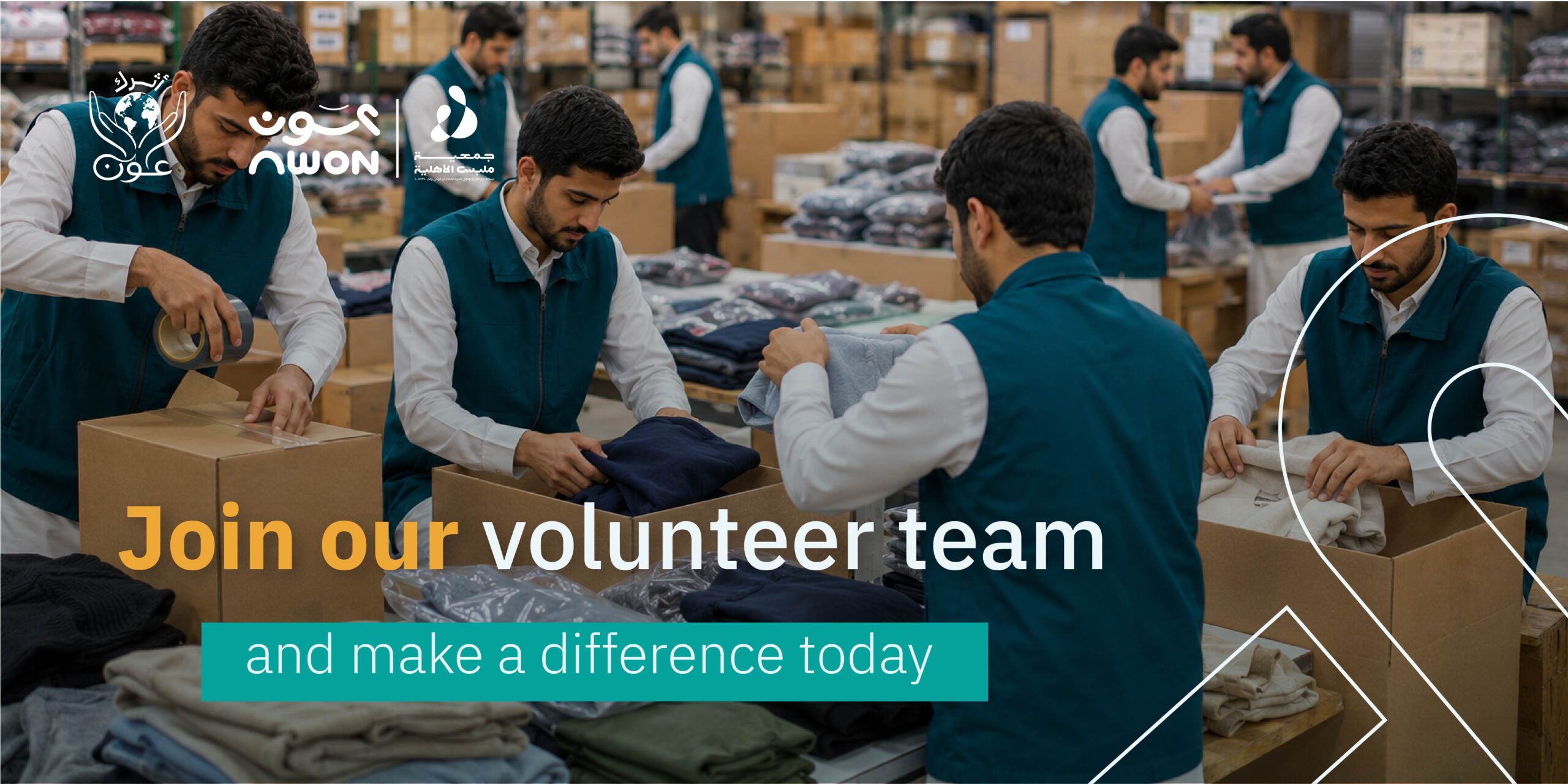
Volunteers are the “heartbeat” of charity operations clothing centers, providing the manual labor required to inspect thousands of items every week. Managing these teams is a specialized skill; it requires training people to spot small defects that might otherwise be missed. A well-coordinated volunteer team is like a professional kitchen, everyone has a station, from the “inspectors” to the “folders” and the “packers.”
- Training and Sensitization: Volunteers are taught to view every garment through the eyes of the recipient. They ask: “Would I be happy to see my child wear this to school?”
- Role Specialization: Some volunteers focus exclusively on footwear, ensuring shoes are paired and cleaned, while others handle delicate traditional wear like abayas or thobes.
- Efficiency Drives: By having clear stations, a team can process hundreds of items in a single shift, ensuring the lifecycle of donated clothes moves quickly from the warehouse to the street.
Distribution Planning
Distribution is the “last mile” of the journey, where the charity decides exactly where each item will go based on real-time community data. Instead of random handouts, nonprofit clothing handling involves matching specific sizes and needs to registered families. This prevents the “mismatch” problem, where a family with five girls accidentally receives a bag of men’s large shirts.
Matching Supply to Local Demand:
- Vulnerability Mapping: Charities identify which neighborhoods have the highest density of school-aged children or elderly residents.
- Pop-up Boutiques: Some organizations set up temporary, dignified “shops” where families can choose their own clothes for free, preserving their sense of agency and choice.
- Emergency Response: If a fire or natural disaster occurs, the distribution plan shifts immediately to provide “emergency bundles” to the affected area.
Measuring Impact
Success in how charities handle clothing donations isn’t just measured by the weight of the clothes collected, but by the tangible change in the community. Charities track data to prove their effectiveness to donors and government regulators. They move beyond “kilograms” and look at “lives touched.”
- Utilization Rates: They measure what percentage of collected items actually reached a home versus what went to recycling.
- Social Savings: They calculate how much money families saved on essentials, allowing that income to be spent on food or education.
- Environmental Scorecards: They track the carbon footprint saved by diverting thousands of tons of textiles away from landfills. This data is vital for supporting broader national goals like the Kingdom’s sustainability initiatives.
The Journey of a Single Shirt: An Analogy
Think of a donated shirt as a “dormant traveler.” While it sits in your closet, its journey has paused. When you initiate a donation, you are giving that traveler a ticket to a new destination. The charity acts as the “travel agent” and “navigator.”
They clean the traveler up, find them a new home where they are wanted, and ensure they arrive in top condition. If the traveler is too “tired” (worn out) to continue the journey as a shirt, the charity helps them retire gracefully into a new role, perhaps as a cleaning cloth or a piece of insulation, so they never end up forgotten in the “waste” of a landfill.
Know more about: Donation Standards
Why the “Professional Touch” Changes Everything
Many people wonder if they should just leave bags on the street or in random bins. The reason professional handling matters is that it protects the items. A shirt left in a rusted street bin for three days in the sun will degrade.
A shirt handled through an official charity operation’s clothing system is protected from the elements, ensuring that your generosity actually “survives” the trip to the recipient.
Partnering with AWON for a Seamless Experience
When you are looking for a way to contribute to this cycle of care, AWON Charity provides a bridge that is both modern and deeply rooted in the values of our community.
- A Simple, Digital Approach: Forget the old days of searching for bins; you can arrange everything through their intuitive online portal. The ease of ordering means you can turn a Saturday morning of cleaning into an afternoon of social impact with just a few clicks.
- Total Versatility: AWON doesn’t limit your generosity. They are equipped to manage all varieties of clothing, every type of footwear, and a wide range of bags and accessories, ensuring no part of your closet goes to waste.
- Professional Doorstep Collection: One of the most appreciated aspects is their commitment to a free-of-charge pickup from your site. They send a specialized team to your home, removing the logistical headache of moving heavy bags.
Do charities use software to manage donations?
Yes, most modern organizations use inventory management software to track the volume and type of items they receive. This allows them to predict trends, such as needing more winter coats in November, and ensures they don’t overstock items they already have in abundance.
How many volunteers do they need?
The number varies, but a mid-sized charity often relies on dozens of volunteers weekly. Some focus on the physical sorting, while others help with the administrative side, like calling families to confirm their clothing sizes or coordinating the daily pickup schedules.
How do they decide who gets what?
Decisions are based on “Needs Assessment” forms. Families register with the charity and provide details about their household, ages of children, shoe sizes, and urgent needs. The charity’s distribution team then “picks” the inventory that matches those specific profiles to ensure the aid is actually useful.